

 Available in GB
Casino Software: Who Builds the Games You Play
When you open an online casino, the visible part is usually the least interesting bit. You see a lobby, a search bar, a game window and some buttons. Behind that sits a stack of software handling the content, the account connection, the game session, records, security and the operator’s compliance duties.
I used to treat the casino website as one complete product. That was a mistake. The brand on the screen may not have built the games, supplied the platform or even developed the payment and account systems. Several companies can sit behind one casino account, each responsible for a different layer.
That distinction matters in the UK. If an operator provides online gambling to consumers in Great Britain, it must hold a UKGC licence, wherever the business itself is based. Online casino activity falls under remote gambling, so the relevant operation needs a remote operating licence. The software provider and the casino operator are related, but they are not automatically the same business.
This list highlights operators by their key practical terms, including licensing, available bonuses, payout timing and minimum deposit requirements. Use it as a quick reference when reviewing options for the UK market.
License: UKGC Operator Licence · Bonus: £20 bonus · Payout speed: Within 48 hours · Min. deposit: £10 Silverbond Enterprises operates under a UKGC Operator Licence and offers a £20 bonus. Its minimum deposit is £10, with payouts stated as being processed within 48 hours.
License: UKGC Operator Licence · Bonus: £100 bonus · Payout speed: Within 24 hours · Min. deposit: £10 LeoVegas operates under a UKGC Operator Licence and provides a £100 bonus. It has a £10 minimum deposit and lists payouts within 24 hours.
License: UKGC Operator Licence · Bonus: £100 bonus · Payout speed: Within 24 hours · Min. deposit: £10 ProgressPlay Limited holds a UKGC Operator Licence and offers a £100 bonus. The minimum deposit is £10, while payouts are stated as being made within 24 hours.
License: UKGC Operator Licence · Bonus: £50 bonus · Payout speed: Within 48 hours · Min. deposit: £10 Platinum Gaming Limited operates under a UKGC Operator Licence and includes a £50 bonus. It lists a £10 minimum deposit and payouts within 48 hours.
License: UKGC Operator Licence · Bonus: £200 welcome bonus · Payout speed: Within 48 hours · Min. deposit: £10 32Red operates under a UKGC Operator Licence and offers a £200 welcome bonus. Its minimum deposit is £10, with payouts stated as being processed within 48 hours.
License: UKGC Operator Licence · Bonus: £100 bonus · Payout speed: Within 24 hours · Min. deposit: £10 Genesis Global Limited holds a UKGC Operator Licence and offers a £100 bonus. It has a £10 minimum deposit and lists payouts within 24 hours.
The operator is not always the builder
A casino operator runs the customer-facing service. It chooses the brand, accepts registrations, manages accounts, publishes terms and takes responsibility for the gambling service offered to its customers.
A game provider, by contrast, develops or supplies the playable software. Its work may include the game engine, mathematical model, graphics, sound, random number generation and the technical tools needed to deliver the title through a casino platform. The provider’s name might appear in a game menu, in the loading screen or somewhere in the information panel, but it may not be the company you opened an account with.
Then there is the platform provider. This company supplies the underlying casino system: the lobby, account connection, game integration, reporting tools and operator controls. One platform can connect a casino to content from several providers. The operator can then present that content under its own branding.
So, in simple terms:
- The operator runs the casino service.
- The platform provider supplies much of the operating infrastructure.
- The game provider creates or distributes the game software.
- The regulator sets and enforces the rules applying to the licensed gambling service.
The boundaries are not always neat. A large gambling group may develop some technology internally and source other parts from specialist suppliers. A smaller operator may rely heavily on third-party software. What matters to you is not the corporate diagram by itself, but who is responsible for the service you are using.
What casino software has to do
Casino software is more than animation and buttons. It has to connect a player’s account to a specific gambling product and keep the activity recorded accurately. It also has to support the operator’s controls around access, play, account management and responsible gambling.
At the game level, software determines how a session operates. It handles the instructions sent by the player, the result returned by the system and the information shown on screen. At the platform level, it controls how the game is made available, which account can access it and how the operator manages the wider lobby.
Runs the customer-facing service, manages accounts, and takes responsibility for the gambling service.
Supplies the underlying infrastructure, including the lobby, account connection, and reporting tools.
Develops or supplies the playable software, such as the game engine, graphics, and mathematical models.
There is also a less visible administrative side. Operators need records, monitoring tools and systems that allow them to investigate activity and respond to regulatory obligations. Software may help flag unusual behaviour, apply account restrictions, display responsible gambling tools or prevent access when the operator’s rules require it.
That does not mean software replaces human judgement. It means the operator needs a technical framework capable of supporting its duties. A polished interface tells you very little about whether the underlying controls are sound.
I have made that mistake myself. A casino can look clean, load quickly and offer a familiar selection of titles while still leaving basic questions unanswered: who operates it, which company supplies the service and whether the domain belongs to the licensed business shown in the terms.
Looks are cheap.
Providers, integrations and the player experience
Game providers normally deliver content through an integration with the casino’s platform. The player may never notice that connection because the casino aims to make the lobby feel like one product. You click a title, the game opens, and the provider remains in the background.
That separation can affect the experience in practical ways. A game may appear in the lobby but be unavailable in a particular jurisdiction, account state or device environment. A provider may update its software, while the casino controls how the title is displayed. If a technical problem occurs, the casino’s support team may need to pass the issue to the platform provider or the game supplier.
This is why “powered by” language should not be read as a complete explanation of responsibility. It may identify a technology supplier, not the party that holds the customer relationship. The casino operator remains the business you deal with when you register and use its remote gambling service.
The same point applies to fairness claims. A provider’s reputation may be relevant, but it does not turn an unverified casino into a regulated one. The licence question belongs to the operator providing the service to Great Britain consumers.
The UK regulatory layer
The UKGC is the authority that regulates gambling services in Great Britain. Its role is not limited to checking whether a website has attractive software. It can impose fines, issue warnings, suspend or revoke licences, and investigate illegal gambling.

That enforcement power reaches the operation behind the website. If an operator provides online gambling without the required UKGC licence, the fact that its games came from a recognised software company does not fix the problem. A legitimate supplier cannot, by association alone, give an operator permission to serve Great Britain customers.
The opposite is also worth remembering: a casino displaying familiar provider names is not proof that every part of its operation meets UK requirements. The operator still needs the appropriate remote operating licence for the online gambling service it provides.
This is where the technical and legal sides meet. Software must support the operator’s regulated duties, while the operator must use the software within the framework applying to its licence. A game provider can supply tools, content and integrations, but the casino cannot outsource its basic responsibility simply by outsourcing technology.
What I check before trusting the software
I do not start with the provider logos. I start with the operator behind the site and the service it says it offers. The provider list can tell me where some content came from, but it does not answer the more important question: who is accountable for this casino?
I then look at the game information itself. A properly presented product should make it possible to understand which software is running and whether the game has loaded correctly. If the interface is broken, the rules are inaccessible or the session behaves unexpectedly, I stop rather than assume the problem will sort itself out.
Finally, I treat software quality as evidence of a working product, not evidence of a safe operator. Fast loading, attractive design and well-known supplier names are useful conveniences. They are not a licence.
That is the part I missed when I first started playing online. I judged the casino by its front end. Now I see the front end as a shop window. The real question sits behind it: which company runs the remote gambling service, and does it have the UKGC permission required to provide it in Great Britain?
Payments and Withdrawals Without the Nasty Surprises
I used to treat the cashier as the boring bit of a casino site. Deposit, play, withdraw — job done. Then I had a withdrawal held while the operator checked my account, and the “simple” part became the only part I cared about.
Credit Card Restriction
Operators must not accept credit card payments for gambling, including those made through certain money service businesses or e-wallets funded by credit.
For UK players, payment rules are not just website housekeeping. They affect which funds can enter an account, what an operator can ask you to verify, and whether your balance remains accessible when you decide to stop.
Depositing money: the first checks matter
A casino should make its available payment methods clear before you commit money. The familiar options may include bank-based payments, cards, e-wallets, and services such as PayPal, Skrill, Neteller, Paysafecard, Boku, Faster Payments, or Open Banking. Availability is not universal, though. It depends on the operator, the account, and the payment provider.
The important UK restriction is straightforward: operators must not accept payment for gambling by credit card. That includes payments made through a money service business. They also cannot accept a credit-card deposit through an e-wallet funded by credit.
That last point is where the wording can become slippery. An e-wallet is not automatically acceptable merely because the casino lists it in the cashier. The operator must be able to show that the wallet provider prevents credit cards being used for online gambling through that wallet. A familiar logo does not remove that responsibility.
So I would not assume that a payment method is permitted just because it appears beside the deposit button. Check whether the method uses your own funds and whether the casino’s terms explain any restrictions. “Available” and “usable for your situation” are not always the same thing.
Your balance is not meant to be trapped
One rule matters more than any promotional wording: players must be able to stop playing at any time and retain the remaining deposit and winnings earned from that deposit.
That does not mean every withdrawal is processed instantly or without checks. It means an operator cannot make continued gambling the price of getting your own eligible balance back. If you request a withdrawal, you should not be pushed into reversing it simply to keep access to your money.

I have made that mistake myself. A reversed withdrawal feels harmless when the balance is sitting there on screen. It is less harmless after a few more spins. If you want the money out, leaving the withdrawal in place is usually the cleaner decision.
A casino may still apply its stated account and verification procedures. It may need to confirm who you are, understand the source of funds, or complete anti-money-laundering checks. Those checks are part of the operator’s compliance duties, not a reason for you to keep playing while the process is unfinished.
Why a withdrawal can be checked
Remote operators must implement AML/CTF and KYC policies. In plain English, that means they need procedures for anti-money laundering and counter-terrorist financing, as well as knowing their customer.
The checks can cover matters such as:
- your identity;
- ownership and control of the account;
- the payment route used;
- the source of funds;
- information relevant to responsible gambling and account protection.
The operator also has to run data-protection, terms-of-use, and complaint-handling procedures. None of this makes a request for documents automatically suspicious. It does mean you should expect an operator to treat withdrawals as a compliance point rather than a casual button click.
The UKGC has taken action where operators failed in this area. William Hill was fined £6.2 million in February 2018 for failures involving player protection and money laundering prevention. Ladbrokes Coral agreed to pay £5.9 million in July 2019 for anti-money-laundering and social-responsibility failings. These cases are a useful reminder that payment controls are not optional decoration.
No magic wording.
If an operator asks for identity or financial information, use the secure process shown in your account or on its official support channel. Do not send sensitive documents to an address copied from an unofficial message. If the request is unclear, ask what is needed, why it is needed, and how the documents should be submitted.
Deposits, net deposits, and affordability checks
Payment activity can also trigger extra scrutiny. From 28 February 2025, remote operators must check customers with net deposits of £150 or more per month.
Net Deposit Checks
From 28 February 2025, remote operators are required to perform checks on customers who have net deposits of £150 or more per month.
The phrase “net deposits” is easy to misunderstand. It is not simply every deposit viewed in isolation. It concerns the relationship between money paid into the account and money taken out during the relevant period. If you move a large amount through an account, the operator may need to assess the activity rather than treating each deposit as a standalone event.
That check does not mean you have done anything wrong. It means the operator has a regulatory duty to examine the customer’s position under the applicable rules. The sensible response is to keep your payment details consistent and answer reasonable verification questions accurately.
Do not use somebody else’s card or account to make a deposit. Even where the payment technically goes through, the mismatch can create an ownership and verification problem when you later request a withdrawal.
Withdrawals deserve a separate look
Before depositing, I would check the withdrawal section rather than relying on the deposit page. Look for:
- which withdrawal methods are supported;
- whether the operator requires the original payment route to be used first;
- what identity or source-of-funds information may be requested;
- whether the account name must match the payment account;
- how complaints are handled if a payment dispute develops.
The supplied UK rules do not set a universal processing time for every withdrawal method, so I would not trust a made-up promise about speed. Bank transfers, cards, and e-wallets can follow different procedures, and the operator’s terms should explain the route available to you.
The tax position is simpler. UK customers pay no gambling tax on winnings, and gambling winnings are tax-free regardless of the amount won. That is separate from the casino’s payment checks: tax-free does not mean verification-free.
A practical cashier check
Before I put money into a casino account, I would run through this short list:
- Is the payment method funded with my own money rather than credit?
- Does the account and payment method belong to me?
- Does the operator explain its KYC and withdrawal process?
- Can I leave the account and retain my remaining deposit and eligible winnings?
- Is there a clear complaint route if the payment is disputed?
- Have I set the required deposit limit before making the first deposit?
That final point is easy to miss. Operators must prompt players to set a deposit limit before their first deposit. It is not a bonus condition and it is not the same as deciding how much you hope to win. It is a control on how much you allow into the account.
I now read the cashier like a contract, not a vending machine. The payment logo is the least interesting part. The useful details are who owns the method, what checks can follow, and whether leaving with your balance is treated as a normal part of the service.
Casino Games: What You Can Actually Play
I used to treat the game lobby like a menu in a hurry: open the casino, spot something familiar, click, and only later wonder what I had actually chosen. That is a poor way to judge a casino. The playable content tells you how the site is organised, what kind of session it encourages, and whether the experience feels clear or deliberately noisy.

In Great Britain, online casino play sits inside a regulated gambling environment. The UK Gambling Commission regulates online casinos, and the Gambling Act 2005 is the primary legislation governing gambling in Great Britain. That does not make every game a good idea, or every session sensible. It does mean the casino is operating within a framework rather than floating outside any rules.
The main casino formats
Most online casino game lobbies divide content into a few recognisable groups. The labels can vary, but the underlying experience is fairly easy to understand.
Slots are the quick, repetitive option. You choose a stake, start a spin, and the symbols determine the result. There is no decision to make during an individual spin that can change the mathematics. I have lost plenty of time treating a losing run as a message to “try one more”. It was not a message. It was just a losing run.
Online slots in Great Britain are subject to a £5 per spin limit for players aged 25 and over from 9 April 2025. That is a rule about the maximum stake, not a promise about affordability or entertainment value. A lower stake can still produce a long session if you keep pressing the button.
**Slot Limit (Age 25+) £5 per spin
**Primary Legislation Gambling Act 2005
**Regulatory Authority UKGC
Roulette gives you more visible choices. You can select an individual number, a group of numbers, a colour, or another betting area shown on the table. The result still comes from the wheel, not from how confidently you place the chips. The extra choices make roulette feel more interactive than a slot, but they do not turn it into a skill-based game.
Blackjack has decisions between rounds and during a hand. You may choose whether to hit, stand, split, or double, depending on the table rules. That decision-making is part of the appeal, although it is easy to confuse having choices with having control over the outcome. I made that mistake often enough.
Baccarat is usually presented through a small number of straightforward betting options, commonly involving the player hand, the banker hand, or a tie. The game is simple to follow, but simplicity should not be mistaken for a way to predict the next result.
Live casino games put a streamed dealer and a real table into the online session. Roulette, blackjack and baccarat are common formats in live lobbies. The presentation can feel more social and less mechanical than an automated game. It is still gambling, though. A human dealer changes the atmosphere, not the basic fact that the result can go against you.
What to check before starting
The title and artwork are the least useful information on a game tile. Before I start, I look for the rules or help screen and check what the game actually allows.
For a slot, that usually means reading the symbol information, paylines or ways to win, bonus features, and the explanation of any special symbols. For table games, I check the available betting areas and the table rules. A blackjack game can feel familiar while using rules that differ from another version. The same goes for roulette layouts and live tables.
I also check the stake controls before making a deposit or starting a session. The minimum and maximum available stake may differ between games, and some lobbies make the lower-cost options harder to spot than the glossy featured titles. I do not assume that a game marked “popular”, “new” or “featured” is better suited to me. Those are labels, not evidence.

The information should be readable without forcing you to guess. If the rules are hidden behind several unclear buttons, or the game starts before you have understood the controls, I take that as a reason to leave it alone. Confusion is not part of the entertainment.
Automated play and live presentation
The difference between an automated casino game and a live game is mainly in the presentation and interaction.
An automated roulette table gives you the result through software. A live table shows a dealer, a wheel and a stream. Automated play can be quicker, while live play usually has more pauses and table activity. Neither format changes the need to understand the stake, the rules and the point at which you will stop.
I have found live games particularly easy to overstay because the table feels like somewhere I am visiting rather than a sequence of bets. There is a dealer, a chat panel and other players. That atmosphere can make the session feel less solitary, but it can also make another bet feel socially natural. I now treat the game as a gambling product first and a social experience second.
Slots create a different problem. Their fast cycle makes it easy to remove the gap between deciding to play and placing the next stake. If I am tired or irritated, that is exactly the format I avoid. The issue is not that one category is automatically unsafe. It is that different formats encourage different rhythms.
Game choice is not risk control
A familiar mistake is choosing a game because it feels “safer”. A simple interface, small-looking symbols or a friendly theme does not tell you what will happen to your balance. Nor does a dramatic title prove that the game is more exciting in any useful sense.
The most practical control is outside the game itself. UK remote operators must provide tools including deposit limits, loss limits, session time limits, reality checks, timeouts and self-exclusion, with self-exclusion available for a minimum of six months. Operators must also prompt players to set a deposit limit before the first deposit. These tools are not game features, and I would not wait until a session is going badly before looking for them.
- Set deposit and loss limits before playing
- Use responsible gambling tools like timeouts or self-exclusion
- Verify the operator on the UKGC public register
- Choose a game based solely on its theme or artwork
- Assume a “popular” or “featured” label implies safety
- Ignore the rules or help screen before starting
You should also be able to stop playing at any time and retain the remaining deposit and winnings earned from that deposit. That matters when the lobby keeps presenting another table or another spin. Closing the game should not mean surrendering money already on the account.
The sensible order is boring but useful: understand the game, set the boundary, then play only inside it. I have done it the other way round. It cost more.
Keep the lobby in perspective
A large game library can look impressive while adding very little to your actual experience. Ten versions of the same format may not give you ten meaningfully different choices. A smaller lobby with clear rules can be easier to use than a wall of thumbnails, animations and “recommended” tags.
I pay attention to whether I can find the basics quickly:
- the rules and game instructions;
- the available stake controls;
- the table or feature conditions;
- the responsible gambling tools;
- a clear way to leave the game and return to the account.
That is enough to make a first judgement. I do not need a game to promise a big moment before I know how it works.
Casino games are entertainment built around uncertain outcomes. Slots, roulette, blackjack, baccarat and live tables offer different pacing and different kinds of involvement, but none removes the need for a boundary. In the UK, the regulated setting provides important obligations for operators. Your part is smaller and less glamorous: read the rules, notice the rhythm of the game, and stop before the session starts making decisions for you.
Bonuses and Promotions: Read the “Free” Bit Carefully
The word “free” has cost me money more than once. I saw a bonus headline, treated the extra balance as if it were mine, and only read the conditions after I had already started playing. That is the wrong order.
A casino promotion is not simply money added to your account. It is an offer with rules attached. The useful question is not “How large is the bonus?” It is “What can I actually do with it, and what must happen before any resulting balance becomes withdrawable?”
What a casino bonus really gives you
Promotions can take different forms: an extra balance after a qualifying deposit, free spins, cashback-style offers, prize draws, or rewards linked to continued activity. The label matters less than the terms behind it.
Before accepting anything, I would check:
- whether the offer requires a deposit;
- whether the bonus is cash or restricted promotional credit;
- which games or products count towards the promotion;
- whether a qualifying action must happen before the offer is credited;
- what happens if you withdraw, cancel the bonus, or close the account;
- when the offer expires;
- whether winnings from promotional play are subject to separate conditions.
The exact rules belong in the promotion’s terms, not in the large banner. A sentence such as “£100 free” can describe promotional credit rather than withdrawable cash. That distinction is easy to miss when the advert is designed to make you click first.
Read the small print first.
I have also learned not to treat a bonus balance as part of my gambling budget. If losing your deposited money would already be uncomfortable, a promotional offer does not make the decision safer. It can make the account look better funded while adding more conditions to the money.
“Wagering” is not a magic word
Bonus terms often describe a play-through or wagering requirement. The important detail is not the word itself but how the operator defines it.
You need to understand what counts towards the condition. A promotion may distinguish between eligible and excluded games, apply different contributions to different products, or restrict the stake that can be used while the offer is active. Some terms may also limit the maximum value of winnings or cancel the promotional balance after a prohibited action.
I am deliberately not giving a made-up multiplier here. There is no single figure that applies to every UK casino promotion, and inventing one would make comparison worse, not better.
Instead, look for the operator’s own explanation of:
- the qualifying deposit or action;
- the balance that must be played through;
- the eligible games;
- the permitted stake;
- the expiry condition;
- the treatment of withdrawals;
- the point at which the funds become available for withdrawal.
If those rules are difficult to locate, badly written, or inconsistent with the advert, I would leave the offer alone. Confusing terms are not a challenge to decode. They are a warning that the headline has been given more attention than the customer’s understanding.
Deposit limits still matter when a promotion is running
A promotion should not push responsible gambling tools into the background. UK remote operators must prompt players to set a deposit limit before their first deposit. That limit concerns the money you put into the account; it does not turn a bonus into a safe spending increase.
The practical mistake is easy to make. You set a deposit limit, see promotional funds appear, and then feel that you have room to continue because the balance is larger. The balance may still be subject to conditions, and the activity may still involve your own deposited money.
Operators must provide tools including:
- deposit limits;
- loss limits;
- session time limits;
- reality checks;
- timeouts;
- self-exclusion, with a minimum period of six months.
The tool is only useful if you set it before the sales message takes over. I prefer to decide my limit while the account is boring, before a bonus banner gives me a reason to change it.
A promotion should never be treated as a reason to raise a limit. If the offer only looks attractive after you increase the amount you planned to spend, the offer is dictating the decision.
Cancellation, withdrawal and self-exclusion
The conditions around cancelling a bonus deserve attention. Some operators remove promotional funds when you withdraw, while others may also remove associated winnings. The exact result depends on the published terms, so do not assume that a withdrawal simply affects the deposited balance.
You should also know what happens if you activate an offer by mistake. Is there a clear way to decline it? Can you remove the bonus without contacting support? Does cancelling it affect money already in the account? These are operational questions, but they decide whether the “free” part has any practical value.

Self-exclusion is different. It is not a promotion setting and should not be treated as one. UK remote operators must connect to GamStop and enforce age control. The responsible gambling framework also requires self-exclusion tools and timeouts. If you are trying to stop, accepting a new offer is not a compromise or a harmless final attempt. It works against the purpose of the restriction.
I have made the classic mistake of seeing a reward as a reason to keep going after I had already decided to stop. The reward was not the problem by itself. The problem was using it to negotiate with a decision I had already made.
Do not confuse a promotion with proof of a safe casino
A polished bonus page tells you very little about whether an operator is reliable. Before accepting an offer, check the casino’s licence details independently.
The UKGC maintains a public register of current operating and personal licences. You can check the operator’s name or licence number against that register and confirm that the listed domain matches the website you are using. That matters because a familiar brand name, copied logo, or professional-looking promotion does not prove that the site is the licensed operator.
Verifying a Licence
To ensure an operator is legitimate, you should:
- Find the legal operator name in the terms.
- Note the licence number.
- Search for these details in the UKGC public register.
- Confirm the domain in the register matches the site you are visiting.
The register also lists recent regulatory actions, including licence conditions, fines, warnings, and revocations. Those entries do not tell you whether a particular offer suits you, but they give useful context before you hand over money or personal information.
The UKGC can issue warnings, impose licence conditions, suspend or revoke licences, and apply financial penalties under the Gambling Act 2005. In other words, a promotion is not separate from regulation. The operator offering it operates within a wider compliance framework, and its licence status is worth checking before the offer becomes the centre of your decision.
A bonus is marketing. A licence is verification.
My short checklist before accepting
I would not accept a casino promotion until I had answered these questions:
- What exactly is being offered: cash, restricted credit, free spins, or another reward?
- What must I do to qualify?
- Which games count?
- What happens if I withdraw?
- When does the offer expire?
- Can I cancel it without losing funds I deposited myself?
- Have I set a deposit limit before starting?
- Can I find and verify the operator on the UKGC public register?
- Does the listed domain match the site in my browser?
If the answers are clear, you can judge the promotion on its actual terms rather than its headline. If the answers are hidden or vague, the sensible value of the offer is probably lower than the banner suggests.
“Free” is only the first line. The conditions are the real product.
Licensing and Non-GamStop Casinos: The Part I Would Check First
The licence is the first thing I check before I get distracted by a welcome banner, a glossy homepage, or a game list that looks like it was designed to empty my account politely. A casino can make plenty of claims about safety. The UKGC public register is where I want the claim tested.
What a UKGC licence actually means
The UK Gambling Commission, usually shortened to UKGC, regulates land-based and online casinos within Great Britain. Its legal basis is the Gambling Act 2005, the primary legislation governing gambling in Great Britain. The Commission was established under that Act and assumed full powers in 2007.
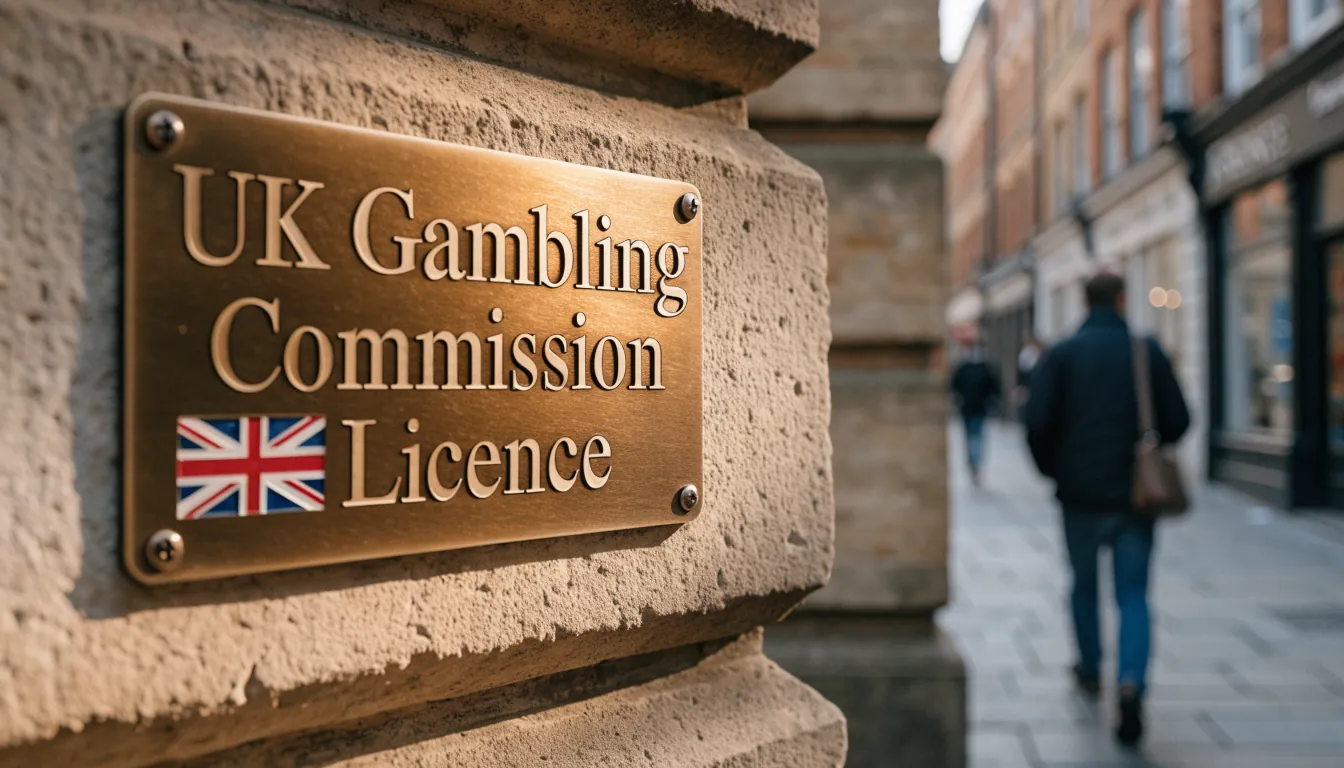
For a remote casino serving consumers in Great Britain, the important point is straightforward: the operator must hold a UKGC licence, regardless of where the company itself is based. An overseas address does not remove that requirement. If the service is providing online gambling to people in Great Britain, its regulatory position still matters here.
That is different from seeing a foreign licence badge on a website. A badge from another regulator may describe the company’s status elsewhere, but it does not replace the UKGC requirement for remote gambling aimed at Great Britain.
The legal gambling age is 18, and applicants for a UKGC licence must also be 18 or over. That does not make a site trustworthy by itself, but it gives you a basic line to check: a casino offering remote gambling to Great Britain should be identifiable through the UKGC’s licensing system.
No badge-reading by instinct.
How I verify an online casino
I do not treat a licence logo as proof. Logos are easy to display, and a logo does not tell me whether it belongs to the operator, an old website, or a completely different company.
The UKGC maintains a public register of current operating and personal licences. To check a casino, I would:
- Find the legal operator name shown in the casino’s terms or licensing information.
- Note the licence number if one is displayed.
- Search the operator name or licence number in the UKGC public register.
- Compare the domain listed in the register with the website I am actually using.
- Stop if the company, number, or domain does not match.
That final comparison is the bit I used to skip. It is also the bit that catches a lot of vague “licensed casino” language. A genuine licence entry should connect the licensed operator with the relevant domain. Finding a similarly named company is not enough.
The register can also show personal licences. Those are not the same as the operating permission for the casino itself, so I would not confuse a person listed in the register with proof that a particular website is authorised to provide remote gambling.
What the non-GamStop label tells you
Non-GamStop casinosis a market label for platforms that are not connected to GamStop, the national online self-exclusion scheme. That label describes access to the self-exclusion network. It does not automatically tell you whether the operator holds a UKGC licence.
This distinction matters because the UK regulatory framework requires remote operators serving Great Britain to hold a UKGC licence, and all remote operators must be members of GamStop. So a site advertising itself specifically as non-GamStop is not presenting a normal route around the Great Britain framework. It is signalling that the service is outside that particular self-exclusion arrangement.
Final Summary
- A professional look or famous provider logos do not guarantee a licensed operator.
- Always verify the operator’s name and domain on the official UKGC register.
- Non-GamStop labels indicate a lack of connection to the national self-exclusion scheme, not increased safety.
- Use the regulator’s records as your primary source of truth rather than marketing claims.
That does not turn the label into a safety rating. “Non-GamStop” is not the same as “licensed”, “approved”, or “safer”. It is a description of the operator’s relationship with GamStop, and you still have to establish which regulator, if any, authorises the gambling service for the market you are in.
I have made the mistake of reading “not on GamStop” as if it meant “more choice”. Sometimes it simply means fewer of the protections I was relying on.
Great Britain is the key boundary
The legal wording is about consumers in Great Britain. That means England, Scotland, and Wales are the relevant market in this context. A company may be based abroad, but that does not change the requirement when it provides remote gambling services to consumers in Great Britain.
This is why a foreign corporate address should not be the deciding factor. Neither should a foreign regulatory logo. The useful question is narrower: does the operator appear in the UKGC register, and does the listed domain match the site?
If the answer is no, I would not describe that casino as a UKGC-licensed option for Great Britain. I would also avoid filling the gap with assumptions about reputation, customer reviews, or how professional the website looks. Those things may tell me how the brand presents itself. They do not replace the licence check.
Claims I would separate from evidence
Casino websites often use words such as “trusted”, “secure”, “regulated”, and “UK-friendly”. I read those as marketing until I can connect them to an official record.
A proper licence check is specific:
- the legal operator is identifiable;
- the operator appears in the UKGC public register;
- the licence is current;
- the domain listed by the UKGC matches the domain I am visiting.
A general statement such as “licensed internationally” is not the same evidence. Nor is a footer containing a regulator’s name without a matching register entry. The wording may be technically impressive while still leaving the central question unanswered.
The UKGC is also able to take enforcement action under the Gambling Act 2005. Its powers include warnings, licence conditions, suspensions, revocations, and financial penalties. That is why I prefer the regulator’s records to a casino’s own description of its compliance. The operator is selling the service; the register is the independent place to verify its status.
What I would do before opening an account
I would check the operator before registering rather than waiting until there is a withdrawal dispute or a blocked account. The order is simple:
- read the legal operator name;
- locate the UKGC register entry;
- match the licence number, if supplied;
- match the listed domain;
- treat a non-GamStop claim as a separate fact, not as evidence of UKGC licensing.
If the site avoids naming the operator, hides the licence details, or gives me information that does not match the register, I would leave it alone. That is not me being clever. It is the minimum check that stops a polished page from making the decision for me.
A licence cannot tell me that I will win. It cannot make gambling harmless. It can, however, tell me whether a casino claiming to serve Great Britain is visible within the regulator’s system. For me, that is the starting line—not the finishing certificate.
Written by the editors at Casinouk Licensing Guide.